Posted on Leave a comment

Cooks vs. Chefs: Why Real Cooking Has Become an Open Secret

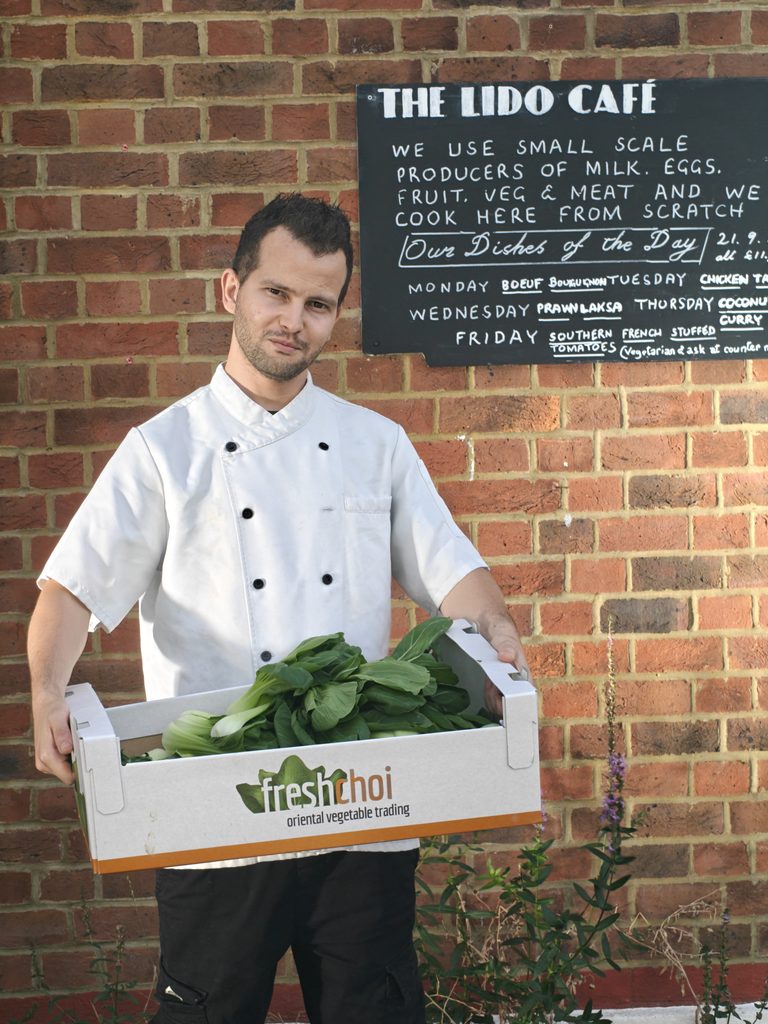
Chef Brahim — one of two brilliants Algerians in the Parliament Hill Lido kitchen

Something you quickly learn in the hospitality business is that cooks and chefs have quite different skills. You can be a gifted cook but have no idea how to run a professional kitchen. Conversely, there are plenty of chefs who can, at best, follow an assembly instruction sheet, but don’t have a clue about real cooking.

We are very lucky to have people on our team with the sixth sense that makes dishes work. This isn’t about ‘little touches’ or far-fetched, trendy ingredients. It’s about seemingly simple things: how you cut an onion; how slowly you sweat those onions (the foundational starting point for so many cultures); making a perfect hard-boiled egg—just set and rich orange in the middle, never pale or chalky; or getting jams and preserves to set without being cloyingly sweet.

True cooks are so rare today that it has become an open secret in France that a vast number of high-street bistros no longer do any real cooking—instead buying in pre-assembled, vacuum-packed menus from industrial catering suppliers. The acid test for any kitchen today is whether, alongside standard options like a croque monsieur, they offer a genuine plat du jour made entirely from scratch.

We are proud to pass that test every day.

Being in London, we draw on a rich tapestry of nationalities to work with cooks who know intuitively what a Provençal daube, a Moroccan tagine, or a Southeast Asian laksa should actually taste like. It is reminiscent of Robert Carrier’s grand 1960s vision in Great Dishes of the World—only made with lived heritage and memory rather than pulled from a recipe book.

Follow our Instagram (@hoxtonbeach) for daily updates on seasonal menus, daily hot specials, and stories from our larder.

Posted on Leave a comment

Forever Amba

The Kumars of MM Poonjiaji (Spices) , Chef Bhushan, head of the development kitchen, and three Mango varieries, including Rajpoori…

We are slowly beginning to roll out something new everywhere we sell falafel: an Iraqi-Jewish egg/hummus/fried aubergine sandwich served not in our own flatbreads but a kind of Pita called Taboon. We don’t make this ourselves, but buy in from one of two Jewish bakeries in North London.

It has not one, not two, but three special sauces. First tahina, which everyone knows from falafel — the thing we insist on here is that the acidity isn’t chemical but is real lemon juice. Second, pomegranate molasses — kind of the Turkish equivalent of balsamic vinegar. Thirdly Amba, the green mango sauce Iraqis go crazy for, which has traditionally been made by Indians for export. The word Amba means ‘mango’ in Marathi, the regional language of Mumbia.

We first heard of Amba from the Syrian owner of a hardware shop near Whitecross Street market, where we’d gone to buy propane. He asked if we did Amba with falafel, and we immediately decided we had to. For years we made it ourselves using green mangoes when they appeared in the wholesale markets. But they were very expense — at least £20 a box, and were only sporadically available. DEFRA officials had a habit of impounding shipments when they arrived at Heathrow claiming they had spiders or other insect infestations.

The obvious route was to buy directly in a mango-growing country. We got some way talking to possible suppliers in Uganda and Pakistan before meeting Kriti Kumar (above left) on a visit to London to visit her trainee doctor sister,just across the road from the Highgate wood café. Her firm MM Poonjiaji has had a pivotal role in sending condiments to this country ; they developed the original Major Grey chutney under their ‘Sun’ brand before selling the recipe that’s essential with English-style Kedgeree and everything in and old fashioned curry restaurant.

It’s possible Poonjiaji’s also pioneered Amba with their Ship brand which together with Camel are the iconic representatives of this pickle, with its strong fenugreek flavour, bright yellow colour and a strong hit of acidity from the vinegar in which the mangoes were historically preserved on their sea crossing of the Indian ocean. So why come in and ask this venerable house to reinvent the wheel?

The reason is that working on recipes in Willesden Junction, we came up with a style that everyone raves about — even Iraqis who aren’t sure it is close enough in style to Ship and Camel to quality as real Amba. It’s just that the classic style is something of an acquired taste, and by using the natural acidity in the fruit and vacuum packing, we can take liberties that those who created Amba couldn’t risk for fear of spoilage.

It’s an enormous privileged to have followed in the foodsteps of the original Major Grey — real person, according to the Kumars with as much of a genuine back story as Colonel Saunders — and to have visited the actual building in Marine Lines in which he would have worked with Chef Bushan’s predecessor to create sweet Mango chutney.

Please try our product with falafel or sabih on one of the market stalls and as soon as possible we’ll add a ‘buy here’ tag so you can order it at home.

Posted on Leave a comment

Jurassic Sparkle

The Sparkling wines of the Caves Bailly-Lapierre are matured in a former limestone quarry 20km south west of Chablis

We usually buy all our wines from a small group of growers in the north of Burgundy — in particular customers can’t get enough of our sparkling wines from Florent Masson Epineuil and Céline Côté nearby in Molosmes. However Florent won’t have any sparkling wine to sell us till the autumn so we’ve gone to the local co-operative. The Caves de Bailly-Lapierre have established a place in history by putting a new wine — Crémant de Bourgogne — on the map in 1975. It is literally the nearest thing to Champagne: if they were just 30 miles to the north-east some of their vineyards would have an extra cachet which could enable them to at least double their price. The co-operative have kindly agreed to sell us a hundred six bottle cases of their lovely sparkling wines which we will be offering at *very* good prices in our cafés. Their only condition is that we don’t sell them online — but if you are interested in home delivery send an email to hoxtonhome@gmail.com and we will send out a price list.

All the co-op’s wines are hand-harvested
Posted on Leave a comment

Beyond sourdough?

Nestling on the right of our celebrated baguettes are our English brown tin loaves — ideal for slicing and toast

Since we began baking in the new Dorée at 26 Chatsworth Road we have been able to bring in new lines and get face to face reaction from our customers. We are proud of our baguettes (made with ‘levain’, which is a mixture of sourdough and yeast) and of course our own sourdough, which is made with a culture that comes originally from the celebrated St John bakery. The latest addition is a 50% wholemeal loaf, based on the recipe in Elizabeth David’s famous bread book, which also has a bit of sourdough — which makes for bread that keeps well — but also not so much as to mark the flavour too much.